
Driving to the Corolla 4x4 Beach: 7 Things to Know Before You Go
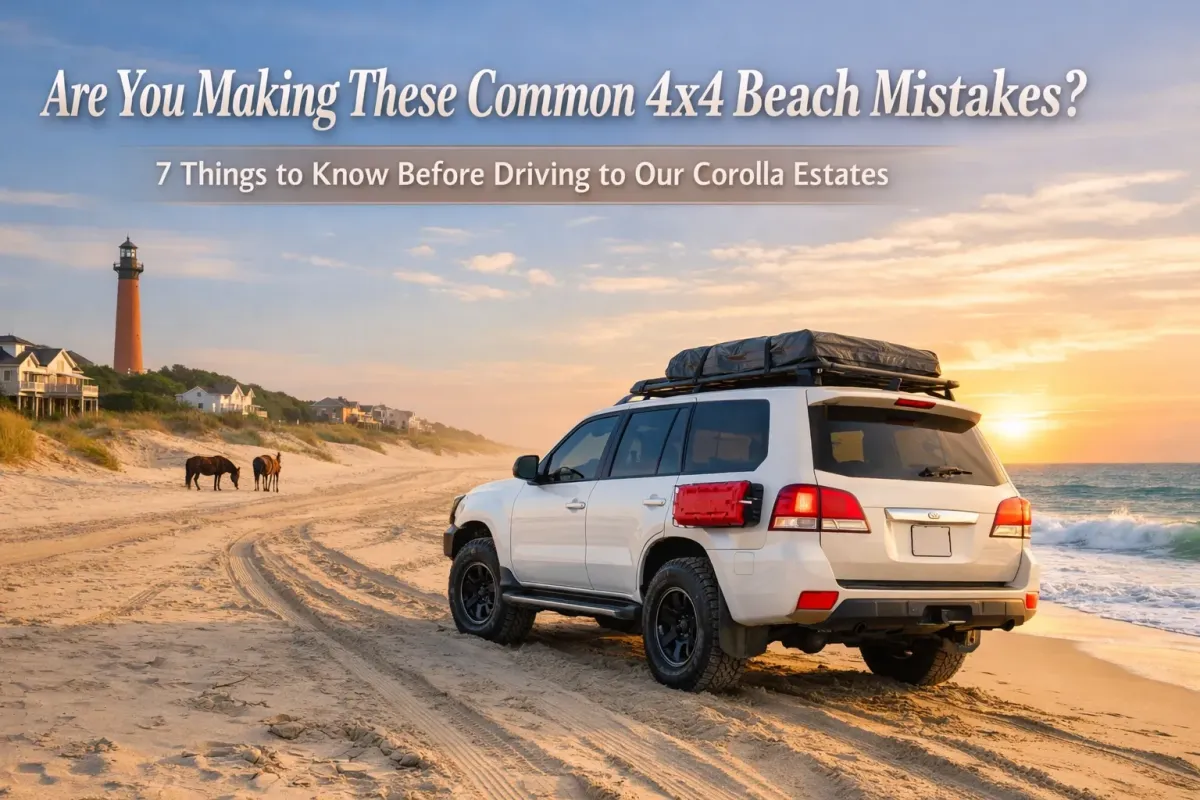
The pavement ends at the north end of Corolla. From there, the only road to our estates is the beach itself. It is one of the most distinctive arrival experiences on the East Coast, and it is also where most first-time visitors make avoidable mistakes.
Here is what you need to know before your tires hit the sand.
1. Air Down Your Tires Before You Leave the Pavement
This is the single most important thing you can do. Standard highway tire pressure, typically 32 to 36 PSI, turns your tires into narrow blades that cut straight down into soft sand. The result is a vehicle buried to its frame within a few hundred feet.
Deflate to 16 to 20 PSI before you reach the sand. Lower pressure spreads the tire's footprint across a wider surface area, letting you float over the sand rather than sink into it. There are designated air-down stations in Corolla before the pavement ends. Use them. Do not wait until you are already on the beach.
When you leave, re-inflate before you return to paved roads. Driving at 16 PSI on asphalt at highway speed damages your tires and handling.
2. AWD Is Not 4WD
This is the question we get most often: can my crossover handle the beach?
All-wheel drive distributes power to all four wheels automatically, which is useful on slippery pavement. It is not designed for deep, rutted sand. You need a true four-wheel-drive vehicle with high ground clearance and the ability to lock into 4-High or 4-Low. Think full-size trucks, Jeep Wranglers, Toyota 4Runners, and similar body-on-frame SUVs.
If you do not have a qualifying vehicle, local rental agencies in Corolla offer beach-ready Jeeps and Suburbans by the day. We can point you to them when you book. Towing fees on the 4x4 beach run $300 to $500 and take hours. A rental is the better option.
3. Check the Tide Before You Drive
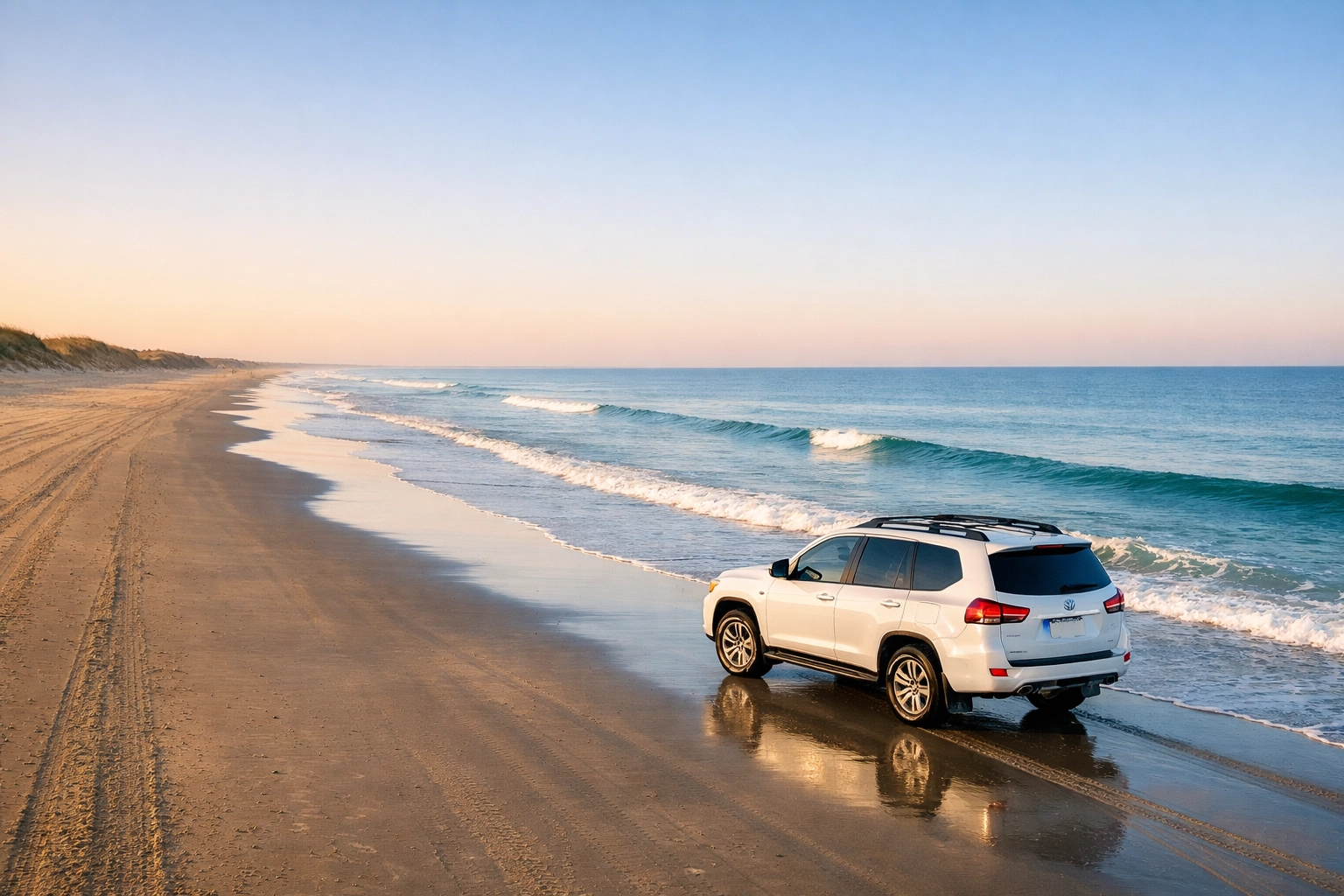
At low tide, the hard-packed sand near the waterline is the easiest surface on the beach. Wide, firm, and forgiving. At high tide, that strip disappears and you are pushed into the soft, deep sand near the dunes. That is where most people get stuck.
Check the tide chart before you arrive and before you leave. Avoid driving within two hours of high tide if you are not experienced. Never drive in the water. Saltwater is corrosive to your vehicle's undercarriage and electronics in ways that are expensive and not always immediately visible.
4. Drive Smoothly and Maintain Momentum
Hard braking on sand pushes a wall of material in front of your tires. Once that wall builds, you cannot move forward without digging out. Rapid acceleration when your tires are spinning buries you faster. Both are instinctive responses that make the situation worse.
The technique is the opposite of what feels natural: maintain steady momentum, coast to a stop rather than braking hard, and use low-range gearing to keep your RPMs steady without straining the engine. If you feel the tires starting to spin, ease off immediately. A slow, steady pace covers more ground than aggressive driving.
5. Wild Horse Rules
The Corolla wild horses are Colonial Spanish Mustangs, a distinct herd that has lived on this stretch of coast for centuries. They are protected by state law and by the Corolla Wild Horse Fund.
The rules are simple and non-negotiable: stay at least 50 feet away at all times. Do not feed them. Do not approach them on foot. Do not honk or try to move them if they are on the beach road. They have the right of way and they know it.
Feeding them is particularly dangerous. Their digestive systems are not adapted to human food, and even items that seem harmless, apples, carrots, bread, can cause serious harm. Violations carry significant fines.
They appear near our estates regularly, particularly at dawn and dusk. The experience of watching a herd move along the shoreline from your deck is one of the things guests remember most about the 4x4 beach.
6. Stock Up Before the Pavement Ends
Once you are on the 4x4 beach, there are no gas stations, grocery stores, or pharmacies. The nearest services are back in Corolla proper, which means a round trip across the sand every time you forget something.
Stock up on groceries, fuel, and any supplies you need before you leave the pavement. Plan for the full week to avoid multiple trips. We can also arrange pre-arrival grocery delivery stocked to your specifications, so the fridge is full when you arrive. Reach out when you book and we will coordinate it.
Always carry a shovel, a tire pressure gauge, and a tow strap in the vehicle. You may never need them, but if you do, you will be glad they are there.
If you plan to park on the beach shoreline (rather than just driving to the house), you need a Currituck County beach parking permit. You do not need a permit simply to drive to and from your rental.
7. GPS Is Unreliable on the Beach
Standard navigation apps do not map the beach road accurately. Some will route you into restricted dune areas or onto private paths. Do not follow GPS once you leave the pavement.
We provide all guests with detailed, turn-by-turn arrival instructions written specifically for the 4x4 terrain. Our Ocean Pearl Road properties are located between the 12 and 15-mile markers on the beach. Look for the mile markers as you drive north; they are posted on posts along the dune line.
Cell service is generally available along the coast. All our properties have high-speed Wi-Fi.
Why the 4x4 Beach Is Worth It
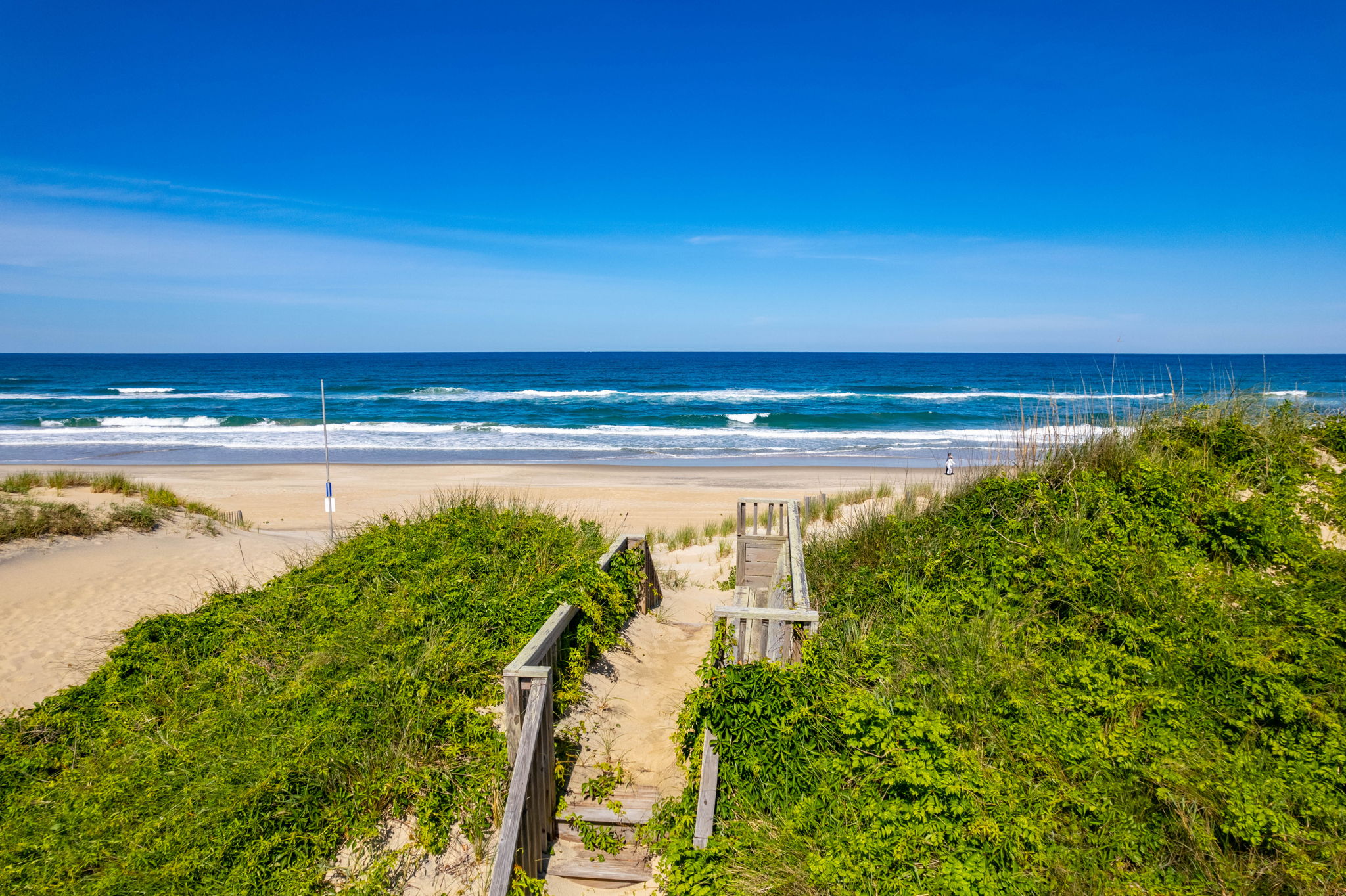
The barrier to entry is exactly what makes the 4x4 beach what it is. No paved roads means no casual day-trippers. No commercial development means no beach chairs rented by the row, no music from neighboring umbrellas, no strangers walking through your ceremony or your family photo.
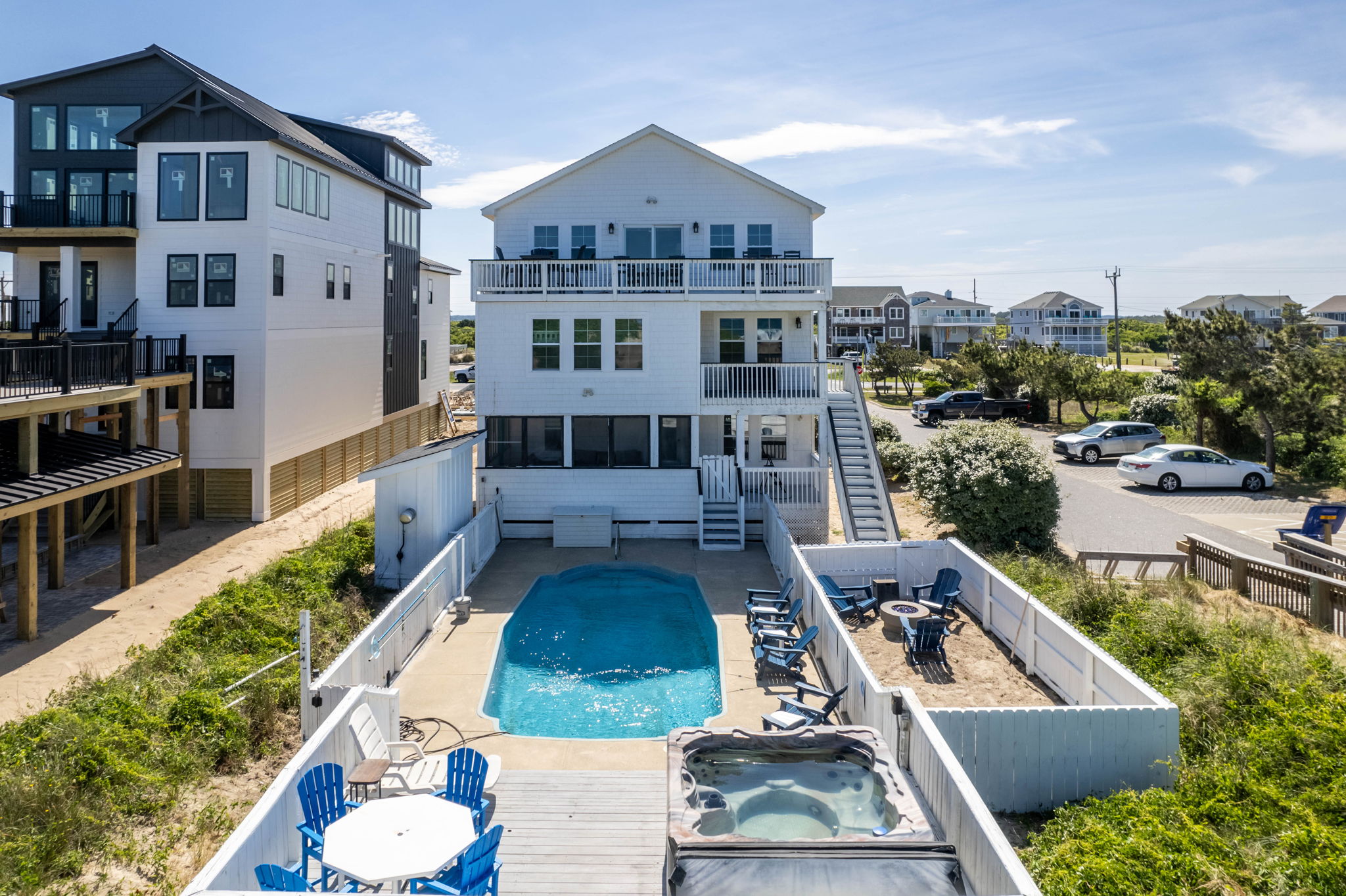
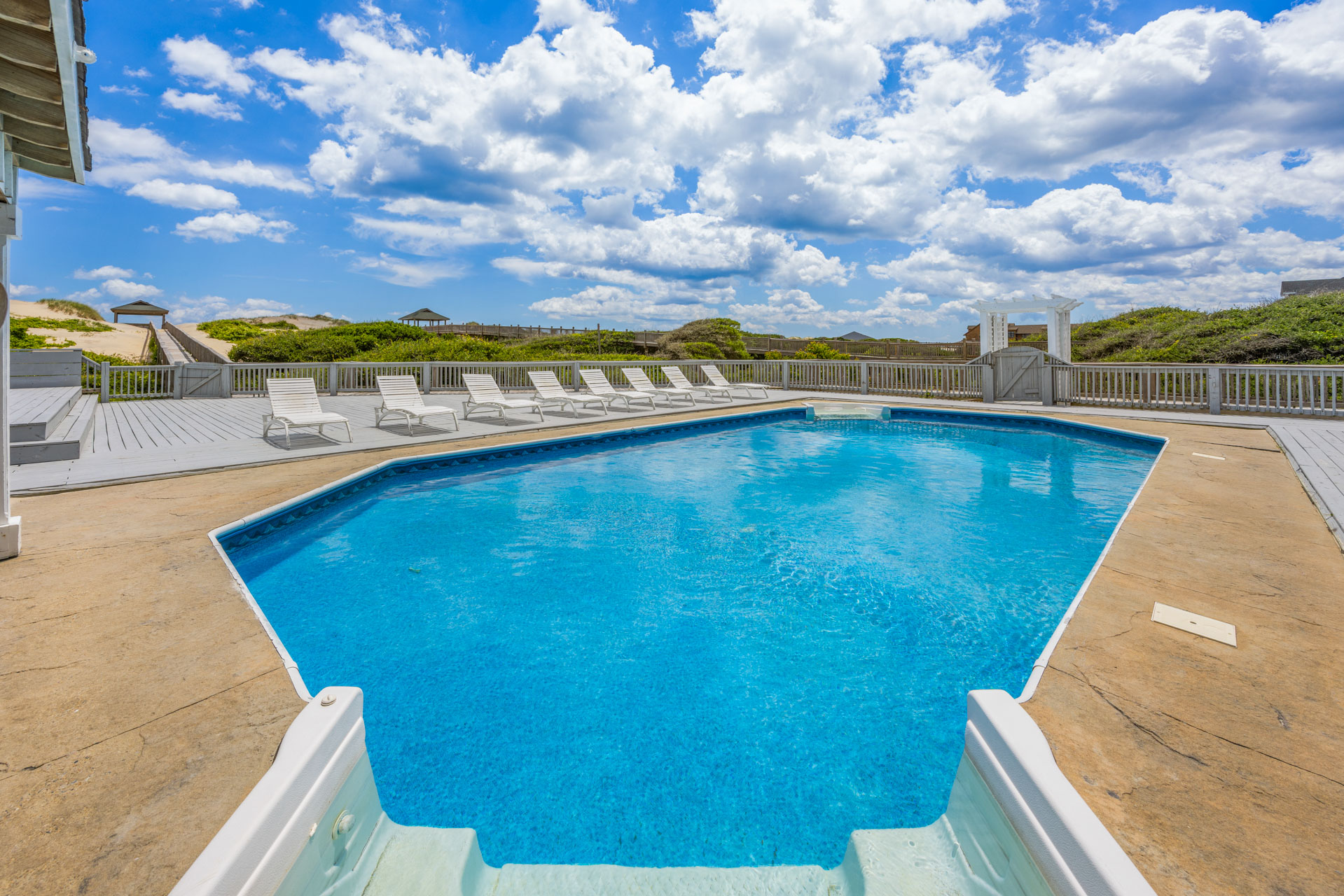
You get miles of Atlantic coastline that feels genuinely private. The wild horses move through the dunes. The only sounds are the surf and the wind. Our estates sleep 10 to 46 guests with private pools, movie theaters, chef-grade kitchens, and direct beach access.
Explore The Three Authors campus or browse the full Outer Banks collection. Peak summer weeks book 12 to 18 months in advance. Reach out to check availability.
Frequently Asked Questions
Do I need a permit to drive to my rental?
No. You only need a permit if you plan to park on the beach shoreline. Driving to and from your rental does not require a permit.
What if I get stuck?
Local recovery services specialize in beach towing and can reach you quickly. Air down your tires and stay on the established track and the odds of getting stuck are low. If it happens, do not spin your tires. Call for recovery and wait.
Is there cell service?
Generally yes. Most major carriers have coverage along the coast. All our properties have high-speed Wi-Fi.
Are the estates pet-friendly?
Many are. Contact us and we will confirm the policy for the specific property you are considering.


